Our department comprises of a Triage area, a resuscitation bay for cri...
Read MoreOur Department has a post-graduate training program in Emergency Medic...
Read More Overview
The department of Emergency Medicine started as a 20 bedded facility in 2018. The Department has undergone multiple upgrades, including a recent extension and face-lift and currently has a 30 bedded modern hospital-within-hospital facility, fully equipped to cater for patients presenting with various medical and surgical emergencies, including Trauma Care. The Operating Room, Intensive Care Unit and a Labour Complex attached to the Department further helps in providing wholesome, high quality emergent care and aids in the management of critically ill patients. The department functions 24 hours a day, on all days (including weekends and public holidays). The highly trained team includes Emergency Physicians, Post- Graduate Residents, Junior Residents and nursing staff on duty round the clock.
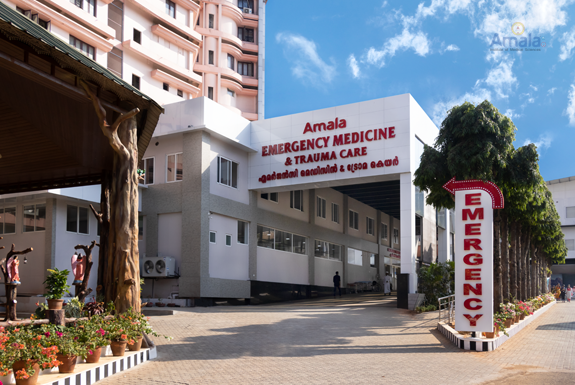
Amala emergency medicine and trauma care
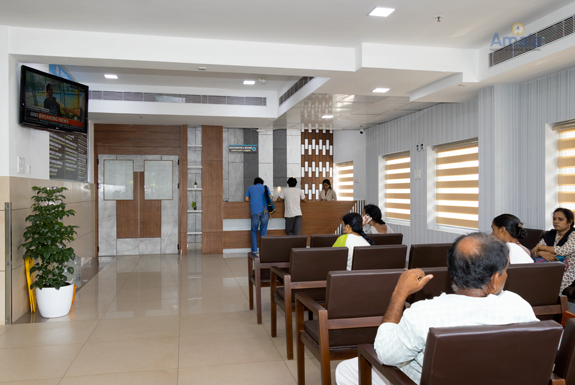
Waiting Area
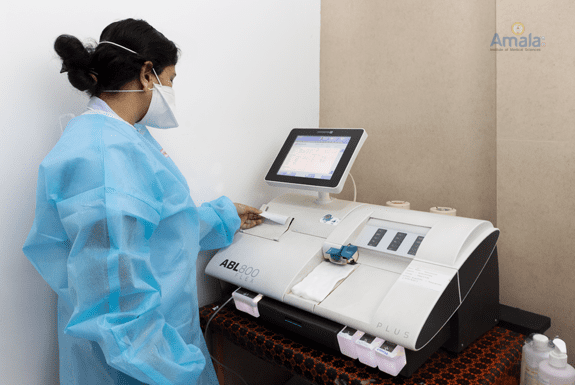
Point of care ABG analysis
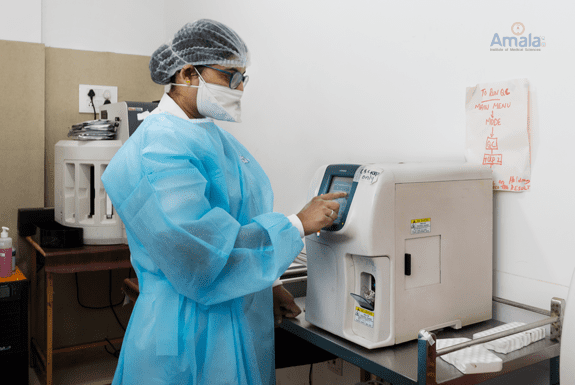
Point of care CBC analysis
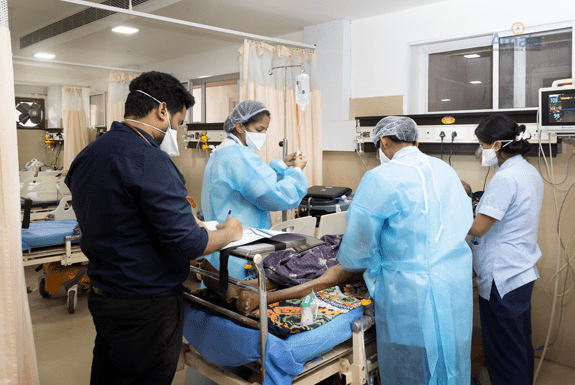
Patient analysis and initial management plan by duty Resident
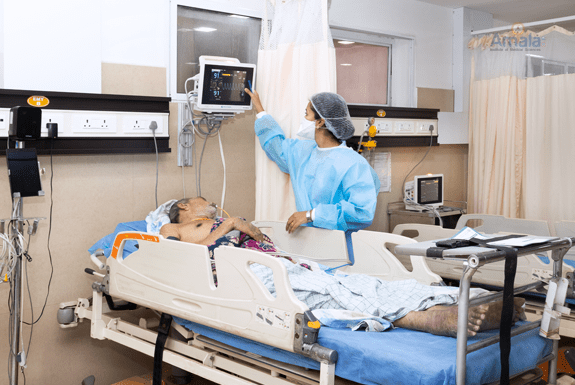
Trained staff setting up the cardiac monitoring for a patient
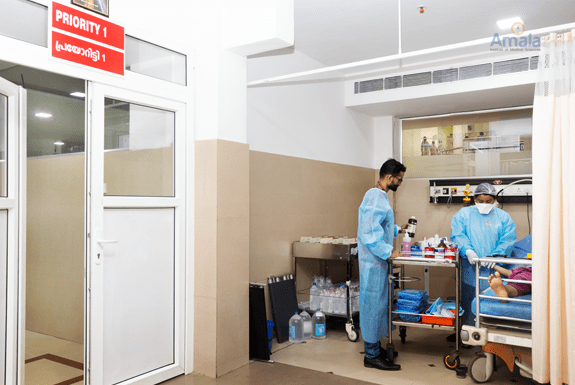
Peripheral venous cannulation by trained staff
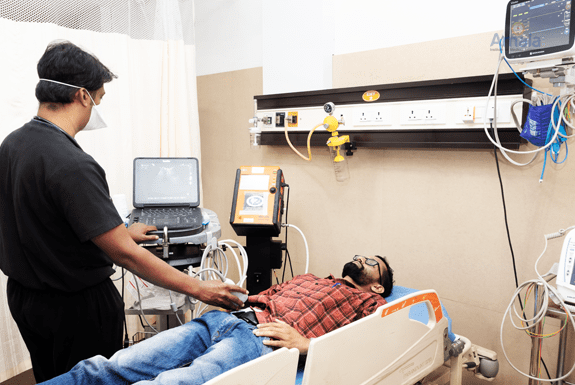
Use of Point of Care Ultrasound
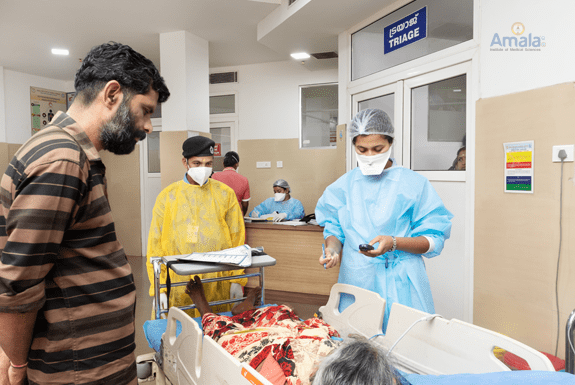
Provision of good bedside nursing care
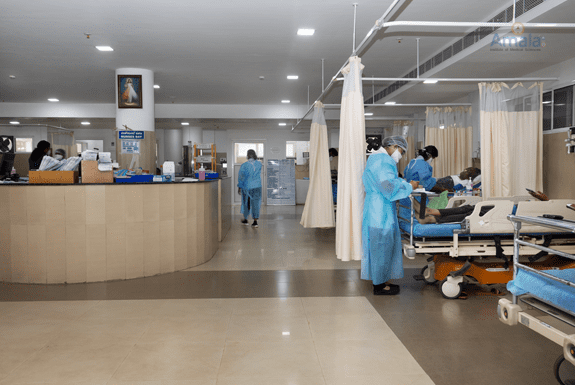
Staff at work in the Emergency Department
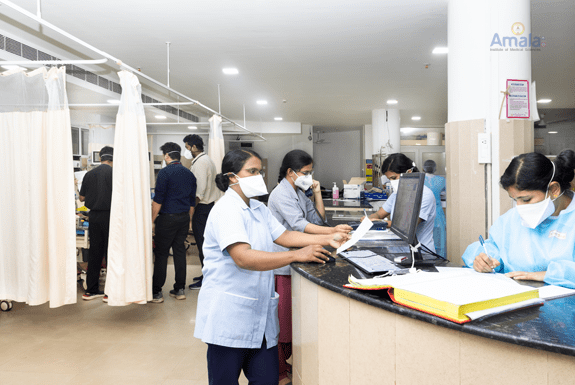
Doctors and staff at work in the Emergency Department
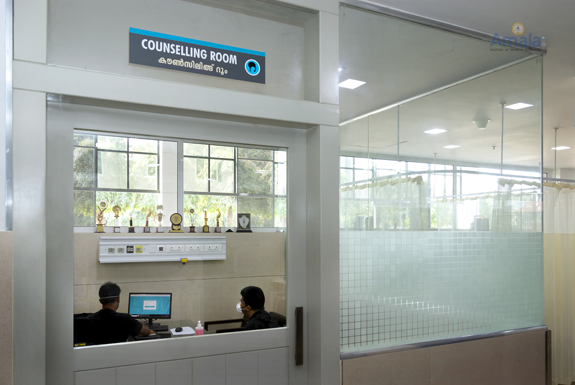
Counseling Room
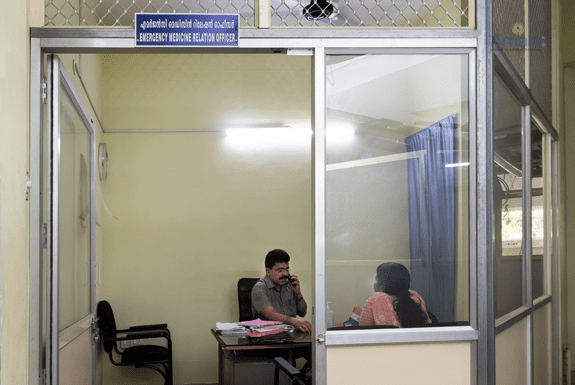
Emergency Public Relations Officer
Our department comprises of a Triage area, a resuscitation bay for critically ill patients, a trauma bay, medical bay, procedure/plaster, major and minor OT, Ophthalmology/ENT dorm and Labour room. The Department is centrally air conditioned with segregations for isolation rooms which have negative pressure ventilation
Doctors and staff trained in provision of acute trauma and critical care
Our Department has a post-graduate training program in Emergency Medicine with an annual intake of 2 trainees. We have a dedicated skills lab, seminar hall and a department library stocked with recent journals and textbooks that help keep the Residents updated on their academics.
A medical emergency is any injury or illness that becomes an immediate threat to a person’s life or long-term health. Severe chest pain, breathing difficulty, major injuries, heavy bleeding, seizures, stroke symptoms etc are some of the examples. An Emergency Medicine hospital in Thrissur like Amala provides urgent assessment and treatment for potentially serious conditions.
When you first reach the Emergency department (ED), the medical team first checks the seriousness of your condition. This is a highly structured system called Triage, which treats patients with life-threatening problems first. The order you are seen will not depend on your arrival time like a normal clinic.
Sudden or severe chest pain should be considered as a medical emergency until diagnosed otherwise. Symptoms like breathlessness, sweating, discomfort in your arm or jaw, can be warning signs of a heart attack. Never wait for the pain to disappear on its own.
Look for sudden facial drooping, weakness in one arm, or difficulty speaking. Sudden vision changes or trouble walking can also be warning signs. A stroke needs emergency treatment and acting quickly can make a world of difference.
Emergency department is specifically built for handling all types of accident injuries. They assess injuries, control immediate risks, and provide life-saving initial treatment. Depending on complexity of the injury, departments like Orthopaedics and Surgery, may also be involved.
No, it does not. A fever is a natural immune response that helps the body to fight off infections, and many moderate fevers can be treated at home. But if a fever comes with confusion, seizures, severe weakness, breathing problems, or signs of dehydration, immediate medical attention is important.
You must tell the medical team the exact location, the nature of emergency, when the symptoms started, the number of people affected, their existing medical conditions, and current responsiveness and breathing status. In case of immediate need for medical attention, you should visit the best Emergency Medicine hospital in Thrissur – AIMS.